Saturday, May 11, 2019

The Poetry of the Imperfect


La Poésie de l’Imparfait

For me, today’s experience at the Abbaye Saint-André outside Avignon was a combination of Hey-How-About-Some-Explanations?!? and You-Know-What-I’m-Good-I’ll-Just-Chill.

From the handout I received upon entering the abbey, I learned that it dated to 982, 999, 1024, or 1118—the verbiage isn’t clear. All I can tell is that 1226 opened a new chapter for the abbey, and in 1292 a fort was built around the abbey. Also in the handout was the factoid that in 587 Saint Casarie died, sparking the establishment of a small religious community. Saint Casarie was married to the bishop of Avignon. Wait—what? A married bishop? No explanation, but no matter. In the abbey was a Chapel of Saint Casarie. Somehow, somewhere in 600 years, that early religious community morphed into Benedictine monks. No explanation. The sprawling grounds today are mostly just crumbling stone walls in clear configurations, but nary a sign tells the visitor “This is where the monks used to make olive oil, chant psalms, shear sheep (to make berets from the wool, of course J, stomp grapes, and transcribe manuscripts.” The handout says that in the 1300s more than 90 monks lived there and maintained a substantial library. I didn’t see a sign saying where that library might have been. No matter. No one to ask anyway.

The abbey’s position atop a high hill makes it a tourist destination for panoramic views. And the views today were breathtaking. The brochure says I was seeing the Pope’s Palace, the Alpilles, the Luberon, Mont Ventoux, and the Dentelles de Montmirail. I recognized the Pope’s Palace and Mont Ventoux but could have used a little help identifying what else I was seeing. But, no matter. No signs, no docents.

At first my curiosity about history was frustrated by the above lack of explanations. But wandering the gardens and ruins was so lovely and relaxing, the facts faded in importance. In the gardens, plantings were profuse but not perfect. Imperfections in nature are beautiful! In the U.S., generally gardens are tourist destinations only if they are perfectly presented with no weeds or overgrowth, every plant blooming, landscape-architect-designed. The gardens of the Abbaye Saint-André were none of those. The fenced “lawn” areas we were advised not to walk on were hardly manicured, just dry dirt with pale green stubble. That was perfectly fine with me.


Still … the stillness hushed my very soul. These mossy stone statues and benches have been still for at least seven centuries. Curved paths and straight-walled ruins blend silently, seamlessly. One could wander endlessly exploring paths branching off other paths. For hours, the only sounds I heard were muffled voices and footsteps crunching somewhere beyond trees. Oh, and birds, the one that goes twee-tweeoo-tweeoo, the one that goes cou-cou-couuu, and the tchew-tchew-tchew bird. No matter their names. I just enjoyed their sounds. Well, there was a period when a rooster furiously cockadoodledooed for about 15 minutes down in the valley. I heard a goose squawk at him to be quiet, and then a dog gruffly barked, “Simmer down, you two.” They all hushed, leaving just birdsong again.

Someone, abbey management I would guess, had placed miscellaneous chairs here and there for people to just chill. My favorite sight was a straw-hatted woman reading a book. I sat on a nearby bench to enjoy a cool breeze refreshing me on a hot day.


Most of the profuse plantings were green overgrowth. Only in-season flowers, irises and poppies, and some spent roses, bloomed, some seemingly arising from cracks in rocks. Well, there were a few other blooms, but in the spirit of the day, I did not stress about knowing their names. I remember the expression, La Poesie de l’Imparfait, the poetry of the imperfect. It seems to fit today.


Monday, April 8, 2019

Britt-Marie Was Here

Britt-Marie Was HereBritt-Marie Was Here by Fredrik Backman

My rating: 4 of 5 stars


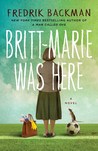
Britt-Marie, a socially awkward middle-aged woman, is not likely to bring life to a dying town, or even climb out of her own rut. But she does. The story of how this happens endeared Britt-Marie to me. Fredrik Backman has created a whole town-full of memorable, quirky characters, including the rat standing on the soccer ball on the novel's cover. Britt-Marie Was Here is worth reading!


View all my reviews

Saturday, March 16, 2019

Blast from the Past ~ Morocco 1971


From Spain, our tour group ferried across the Mediterranean to Tangier, Morocco. Angling out from the Iberian Peninsula, the 1400-foot-high Rock of Gibraltar looms over the meeting of the Atlantic Ocean and Mediterranean Sea. On our trip over, those two bodies of water were having a vicious fist fight over which direction the waves should flow. Furious dark waves heaved our ferry to and fro as if it were a toy boat. If conditions on the day we crossed were typical, over the centuries, Gibraltar must have witnessed enough vomit hurtling over deck rails to fill the ocean. I don’t remember what color I was on the ferry ride back to Spain, but on the way to Morocco, I was awash in sickly green.

After figuratively kissing solid ground, we were mobbed by Moroccans peddling handmade goods. At first, this was distressing. But threading our way through their chaotic commercial congregation, we made note of their woven woolen wares and leather goods and later, got a feel for typical prices in the Kasbah’s lively labyrinth of fragrant, colorful booths. By the time we embarked on the ferry home, we all were laden with souvenirs, most bought from peddlers stalking our tourist bus.

I was pleased with a brown and beige woven wool rug I had bought. Also a hooded djellaba. The knee-length djellaba was brown and beige woven wool, open in front with delicate string ties and a tassel on the hood. Moroccan men and women wore ankle-length djellabas, which I thought must be beastly hot and scratchy in summer, but the times I wore mine back home, it turned out to be surprisingly comfortable. I wish I still owned it.

One souvenir I do still own is a terra-cotta-colored, tooled leather wallet that I bought from a Kasbah vendor for my father. His Navy ship had docked in Tangier during World War II. Although he rarely talked about his war experiences, he did talk with enthusiasm about exotic Tangier. When I gave him my gift, however, he said kindly that he didn’t want it. I don’t remember the reason. For decades, this wallet’s strong leather smell took me immediately back to the colorful Kasbah. Today the smell has faded, but the leather is butter-soft to my fingers, the tooled design beautiful to my eyes, and the memory tender to thoughts of Dad. Seeing it today, I have decided to use it when my current wallet bites the dust. Pourquoi pas? Why not?

More fuzzy memories to match my fuzzy photos—seaside caves seen from our tour bus, women balancing baskets on heads, donkey-drawn transportation, and smiling, dignified doormen.

From 1912 to 1956, Morocco was under the protection and rule of France. Perhaps this was why our hotel in 1971 served French food, including the delicious ice cream mentioned in my previous post. Official languages in Morocco today are Arabic and Berber, but the country experiences some controversy over proposals to include the French language again.

One language note relating to my Kasbah memories is the word souq, or souk, a commercial quarter in a Middle-Eastern city. My French-teacher friend once used the expression J’ai un vrai souq, not because she had a true bazaar in her home, but because things were a bit higgledy-piggledy. My disorganized desk at this moment is un vrai souq, but rather than tend to it, I have more fun reminiscing about the Kasbah and wondering if souq is allowed in Scrabble.

Wednesday, March 6, 2019

Blast from the Past ~ Spain


Multiple pantsuits, wig, and fashion hat ~ items I would never consider taking transatlantic today ~ easily fit in my three pieces of leather luggage, which I had the youthful muscle to easily carry. The year was 1971. Probably April, or whenever spring break was that year. My parents’ early graduation gift to me was a Spain/Morocco trip sponsored by my university. I went with four other girls.


Even in brisk spring air, we kept our apartment windows open to fresh Mediterranean breezes and sparkling sea views. A radio in our kitchen babbled Spanish into those breezes, because I don’t think any of the five of us understood Spanish. The DJ’s rapid-fire delivery had an exotic excitement to it, to my ears anyway, although he could have been giving weather or traffic reports, for all I knew.


Restaurant breakfast was a runny sunny-side-up egg floating in a bowl of grease; lunch was couscous, which a colleague back home had told me I must try. Whatever else I might have enjoyed about couscous was obscured by the rubbery whole octopi I fished out of it. I gamely ate it all, but the experience cured me of octopus for life. My companions apparently also had some unpleasant tastes in their mouths. All five of us agreed that for the rest of our week there, the only safe things to consume were Coca-Cola and bread, of which we purchased huge quantities. Morocco was a different story, probably because we were billeted in a French hotel. I can still taste the rich chocolate ice cream!


We made many memories. On our bus’s winding way to the Alhambra, we ate ham that had been cured underground out in the countryside. We saw farmers transporting goods on donkeys. One day we rented a car to go to a tiny hamlet up a mountain. As if five adults squeezed into a mini-mini-compact car wasn’t enough adventure, the mountain was enshrouded in dense fog.  After holding our breath through many no-visibility switchbacks, we arrived at the village, only to be trailed by two young men insisting we pay them to be our tour guides. All our efforts to shed their company failed until we finally just left to go back down the mountain. A bullfight and disco were fun, as was a horse-drawn carriage ride in Granada after an Easter parade.


My main takeaway from my first foreign experience was to at least learn enough of the country’s language to read signs and menus and say simple phrases to connect with people. Although my memories of Spain are good, they are mostly sensory ~ fresh air, bright colors, exotic sounds, different tastes. We were confused and separated from the people most of the time.


Today when I look at a map of the Costa del Sol, the names Malaga, Fuengirola, Torremolinos, and Marbella are warmly familiar, but as fuzzy as these photos. I cannot remember the town we actually stayed in. When I see on the map all the shopping malls, casinos, and water parks, I am grateful to have had a less commercial taste of Spain and view of a simpler life.

Wednesday, February 20, 2019

Phone-yness on The Perennial Gen blog

Please check out The Perennial Gen blog when you have a chance.

Yesterday they published my article on Phone-yness. It expresses a frustration I have felt when aiming for true community, personal friendships, by attending events planned by others. My article addresses the issue from the standpoint of Christians using church-planned events to nurture friendships, when what better nurtures friendships is personal pursuit, namely picking up the phone to call people. I thank God for church-planned events, because that is where I learn which people I have affinity for, and vice versa. But then I need to take initiative. The reasons why are important, and you can read more here:  https://theperennialgen.com/?p=3169

The same concept holds true for any group you're a member of. If I want to better know a coworker, fellow volunteer, or interest group member, she or I needs to phone for a personal chat or invitation. Phoney-ness, it's a gift.

Tuesday, February 19, 2019

Review of Sophie Kinsella novel

The Undomestic GoddessThe Undomestic Goddess by Sophie Kinsella

My rating: 4 of 5 stars


Sophie Kinsella’s The Undomestic Goddess is a fun read. Brilliant, plucky lawyer, Samantha Sweeting, leaves her London law firm in shame to begin a new life in a small village. There, she learns how to cook and clean, how to relax and enjoy life, and how to place relationship above rat race. She discovers romance and solves a mystery as well. Keeping her previous profession a secret from everyone in the small country village is a source of much hilarity, as is covering her ineptitude for domestic duties.

Although the plot is not especially believable, the characters and their lives appear quite real. Kinsella has included just the right amount of detail. I enjoyed learning about legal deals, catering, and life in rural Britain. I had stomach-twisting moments when I wished Samantha would stop lying, but I suppose that was part of the suspense. I wanted to hang in until she figured out which life she truly wanted. And I was offended by frequent swearing using the name of Jesus and the f-word, which detracted from the humorous tone and was quite unnecessary. A writer can show shock and anger in cleverer ways, and I wish Kinsella had chosen them instead.

That said though, The Undomestic Goddess is true high-spirited, playful chick lit.


View all my reviews

Saturday, January 5, 2019

My review of Being Mortal: Medicine and What Matters in the End


In Being Mortal: Medicine and What Matters in the End, Atul Gawande, M.D., makes a powerful case for improving quality of life in our final years. Drawing on scientific studies, he points out that people facing the finitude of life want meaning. In sharp contrast are case studies of terminally ill or simply aging people caught in a medical system focused on curing what in reality cannot be cured. This results in a person’s last days or years being painfully full of treatment side effects that prevent him from enjoying what matters most to him.

Gawande begins the journey that became this book by questioning whether his medical training had adequately prepared him to help patients with their physical decline and mortality. He looks at how differently a geriatrician and a “regular” physician approach an elderly patient. Older folks are clearly better served by the geriatrician considering the whole person with multiple irrevocable issues natural to aging. Yet this field is lower paying than other medical fields, and not nearly enough doctors train for it.

To begin with, assigning aging to our medical system, as we do in the United States, is a core problem. Gawande posits that it doesn’t belong there. Aging is not about only safety and survival, medicine’s focus. He sets out on a journey to explore how we might change and until the system changes, how he might change to give his patients more control, options, and meaning. “What makes life worth living when we are old and frail and unable to care for ourselves?” [page 92 in my edition]

In conversational style he recounts stories of his elderly relatives, his own patients, and other people with terminal cancer. He looks at the quality of their last days/years when medicine railroads them into trying every procedure and medicine available to prolong their lives, or requires safety above all. He contrasts that with the last days/years of people who weigh their risks, decide what matters most to them (eating chocolate ice cream, visiting with friends, as examples), and choose the medical options that best enable that outcome. He adds to these anecdotes the results of scientific studies on the subject and the wisdom of hospice experts.

Gawande’s journey brings him to understand that the questions he asks a patient facing death are critical. One doctor-patient relationship style is the doctor telling the patient what to do. On the other end of the spectrum is an informative style in which the doctor explains options. Gawande discovers, “In truth, neither type is quite what people desire. We want information and control, but we also want guidance. The Emanuels [medical ethicists] described a third type of doctor-patient relationship, which they called ‘interpretive.’ Here the doctor’s role is to help patients determine what they want. Interpretive doctors ask, ‘What is most important to you? What are your worries?’ Then, when they know your answers, they tell you about the red pill and the blue pill and which one would most help you achieve your priorities.” [page 201] A doctor’s time and words matter. Gawande begins to move from informative to interpretive in his personal doctoring style. This changes choices for both patient and physician.

This book evoked a range of emotions as I read it. I was fascinated to learn the history of nursing homes and assisted care facilities. I felt excited to hear of facilities whose founders really thought outside the box in order to give more meaning to residents’ lives. Maybe I could find one of these places when the time comes for me. My mother’s nursing home does many things to enrich residents’ lives, and I feel glad to know this. Reading this book also helped me trust my gut sense of how to keep my mother from being railroaded by the medical system. I felt sobered learning the devastating trials of patients cited in the book. What difficult choices they had to make. I felt sad for them and their families. I felt vulnerable and oh so mortal. I felt heartened to see instances of the human body triumphing and persevering, at least temporarily, against unbelievable odds. I felt tickled by the sweet simplicity of people’s last requests. I felt awed by the sophistication of modern medicine. And I felt like jumping up and down and cheering for the profound beauty of hospice care.

Atul Gawande takes an uncomfortable topic, end of life, and makes it interesting. I recommend this book for anyone pondering life’s finitude—measuring his horizons in the here and now—and for anyone in any medical field. Gawande’s scientific sources for Being Mortal: Medicine and What Matters in the End are included in a bibliography.